Weaving the Silence
Subtitle: An artist from Cyprus explores the space between the weaving and printmaking.
By Evgenia Vasiloude[1]
I am a Printmaker originally. Between 1981 and 1988, I trained at the Academy of Fine Arts in Kyiv, Ukraine, where I learned traditional and experimental printmaking methods like intaglio and relief. For a long time, my world was hard surfaces. I worked with wood, linoleum, copper, and zinc.
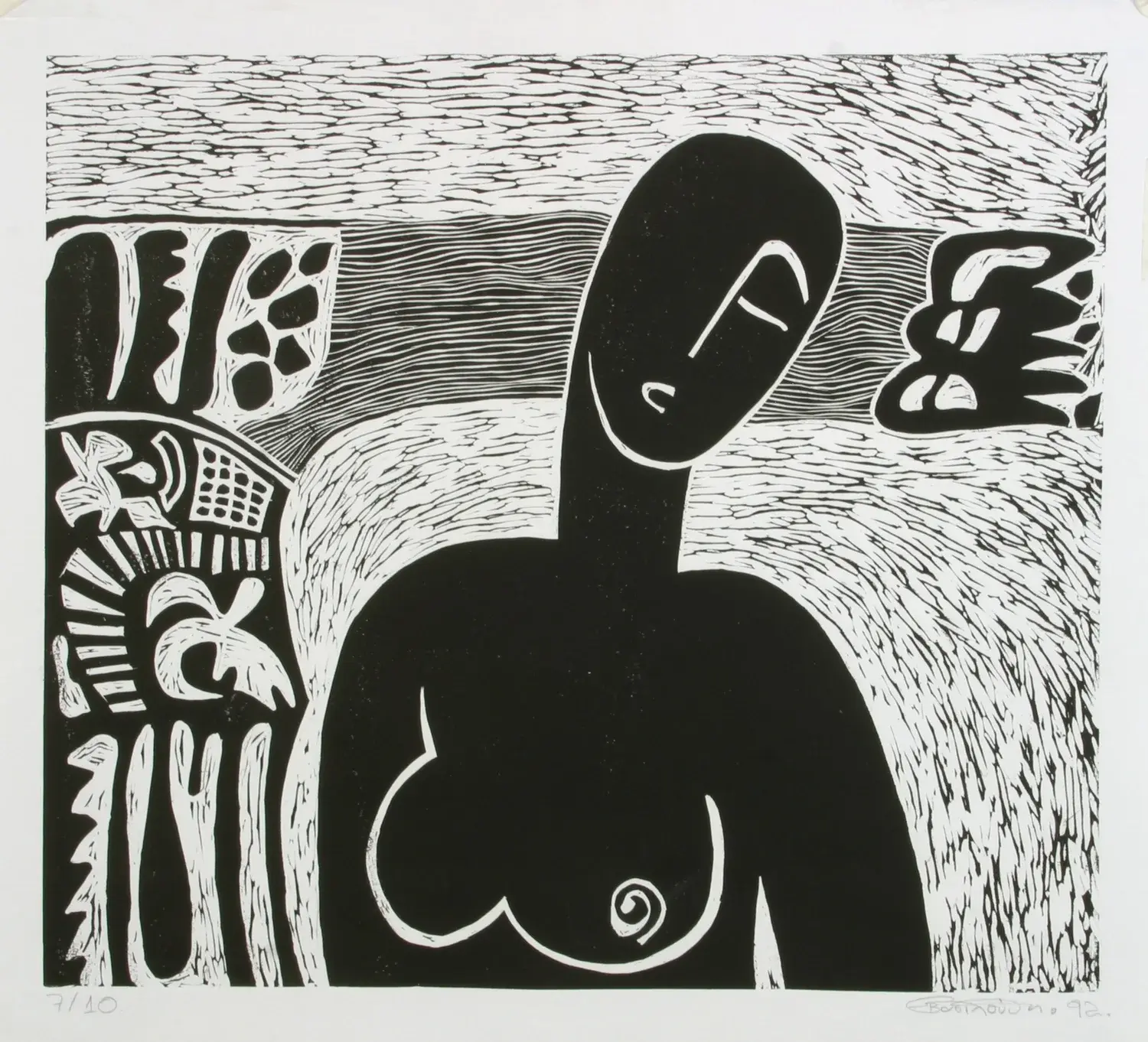
In my early works, I focused on the female figure, with references to the earth goddesses like Demeter and Persephone.
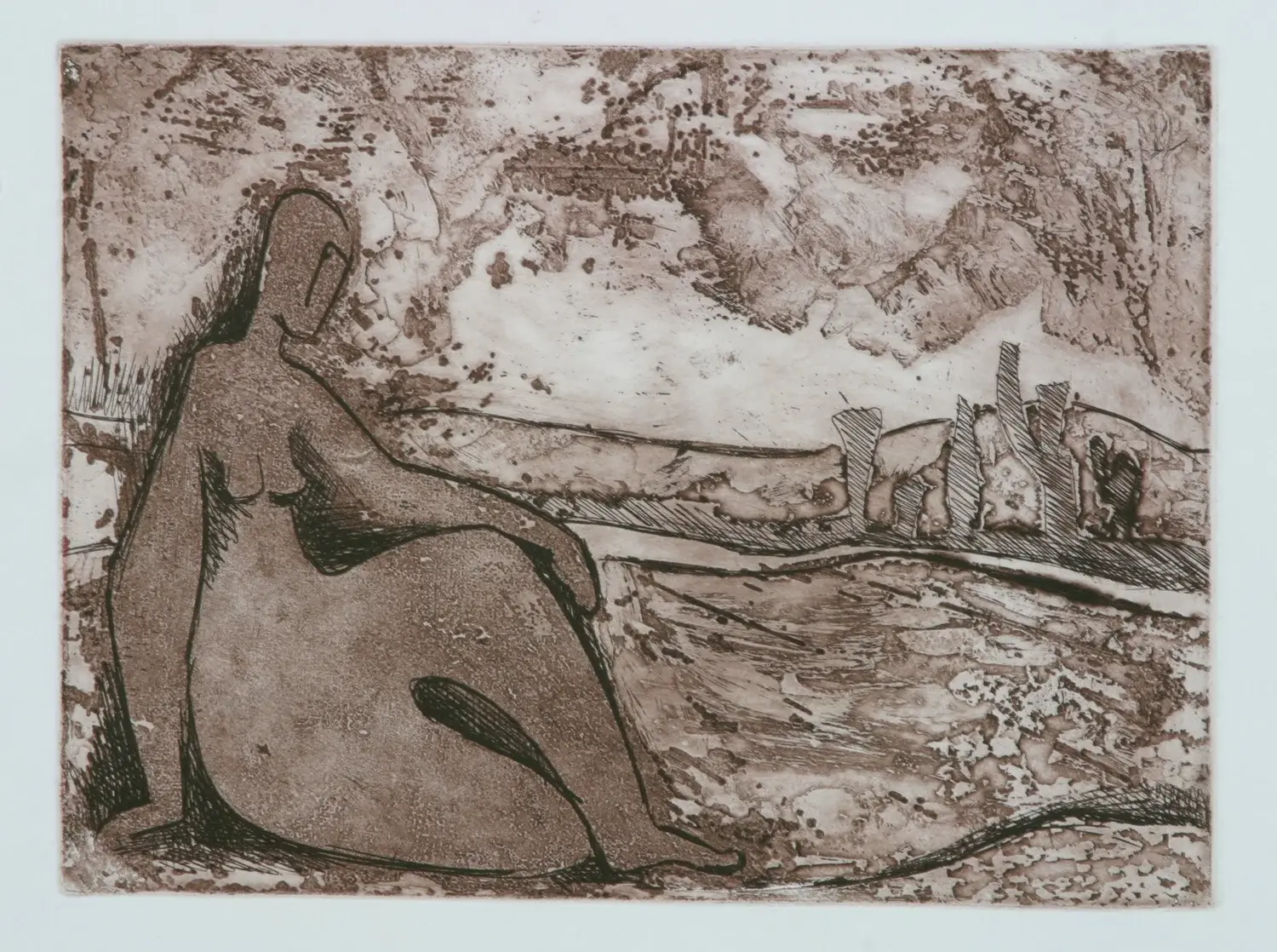
I grew up in a small community and the influence of my family’s agricultural background was strong. It was a sustainable economy, an ecosystem with a strong contribution from women.
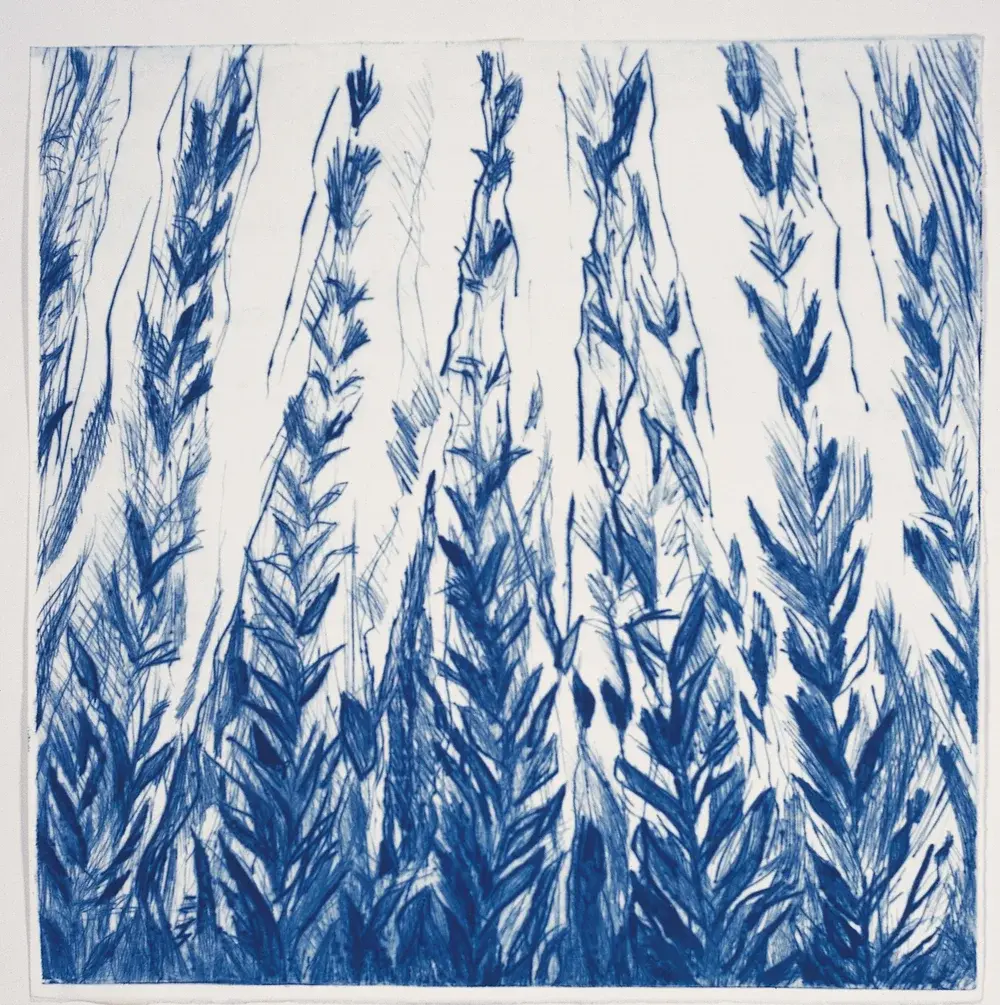
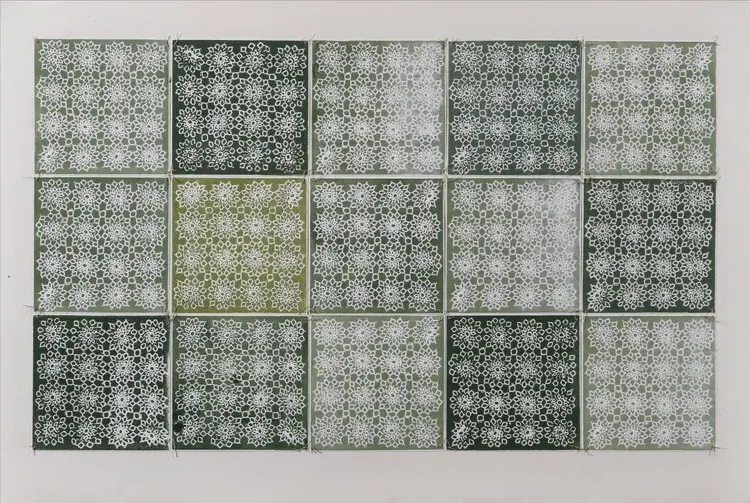
Gradually my interest shifted. I moved from the figure to themes related to nature, environmental concerns, and the fragility of life. In this more recent practice, my tools have changed, and so has my approach. I still create using printmaking techniques like woodcut, linocut and other forms of experimental printmaking, but I have moved toward the softness of fiber. In the last few years, I've produced a series of 'scapes': "Earthscapes," "Seascapes," and "Textscapes." In these works, I have explored weaving, which I use to refer to all the myriad styles and traditions of fabric.
The Materials of Memory
My mother’s and my grandmother’s dowry, woven by them on a loom, is a deeply valuable personal archive. I use these original fabrics in my work. They are old. They are worn.
Worn fabrics carry with them stains and signs of decay. They tell stories and they create meaning through life's traces. They carry the human truth and the energy of the hands that wove them and the bodies that wore them. The memory of this cycle of life is held by cotton and silk .
These materials not just another example of life's detritus or something to be discarded. Recycling them in art is not just about an environmentalist ethos but the idea of rebirth. There is a hidden inner life of the person who wove them. When I hold these fabrics, I feel I am bringing back to life used textiles. It is a dialogue between the past and the present.
Needle and Chisel
My artistic practice involves traditional engravings but extends to printmaking with embroidery — both needle and chisel.
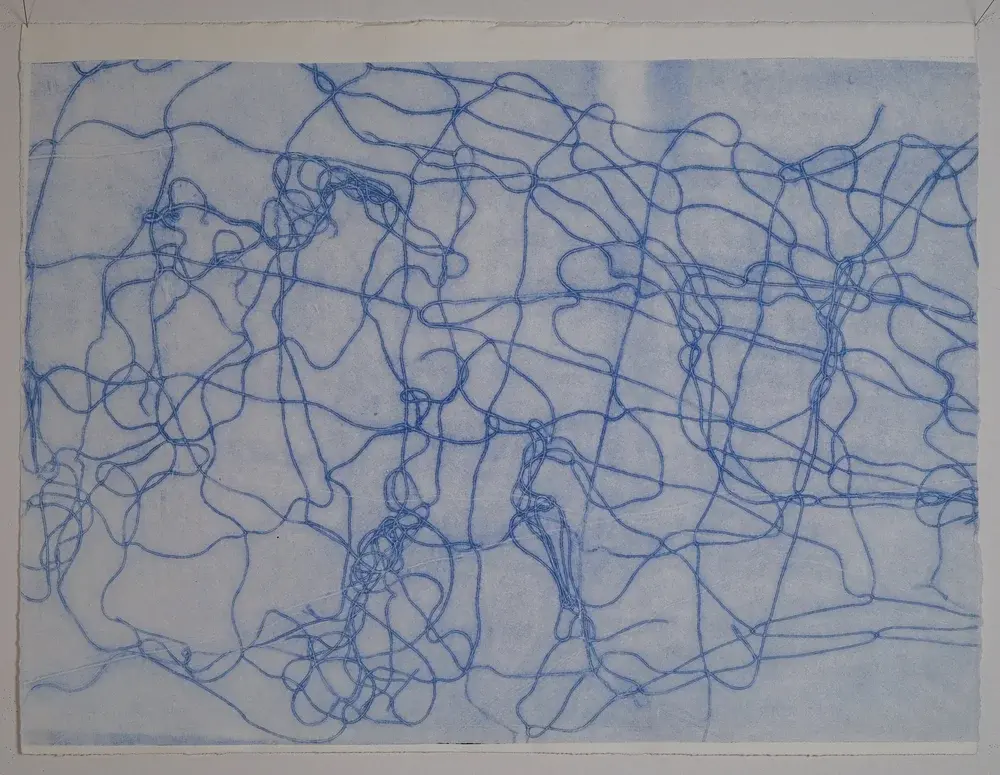
I often experiment with non-toxic engraving techniques and printmaking methods to place images onto these fragile surfaces. I might print embroidery or a woodcut motif onto an old linen sheet. Then, the slow work begins. I stitch and connect prints to create an earth scape, a seascape or any other space/scape.
During the meditative, meticulous process of carving and printing, I found deep connections between weaving, stitching, and embroidery. It was like creating meaning through a silent process. Every unit, every stitch that forms the surface, is not only significant in itself but is also deeply resonant of the whole. Likewise, the whole is resonant of each individual element.
This process is therapeutic. It merges printmaking techniques with the senses in a symbolic, almost prayer-like manner. I shape natural landscapes with everyday stories. The experience is tactile and spiritual. It allows me to create powerful installations where vulnerable worn fabrics become art.
Weaving as Knowledge
I am exploring the concepts of women’s work and identity in my art. I developed these ideas as a homage to women’s work and gender roles. In exploring the relationship between printmaking and textiles, I have enjoyed wandering in this in-between space, which shrinks the distance between fine art and handcrafts.
In the myth of Arachne in Greek mythology, weaving is an act of resistance and is therefore punished. Arachne, a mortal, challenges the hierarchy and spreads knowledge the images in her woven fabrics. As such, she is seen to have committed hubris, a cosmic moral error of sorts, and is accordingly punished by the Athena, the goddess of wisdom.
I believe weaving is knowledge. It is part of an ever-evolving narrative. It holds secret thoughts and brings together thoughts and knowledge to create the future. It is a silent feminine stitching and looming work of art that carries the hidden thoughts of the person who created them.

A Process of Healing
Today, political polarization and the climate crisis have destroyed the social fabric. The challenge for art today is to create connections and a network of communication to protect vulnerable life. The dominant development model based on consumerism has condemned many forms of life on the planet.
My art is a process of creating hope. It is a poetic way to talk about the fragility of human life and every form of life. I do not try to hide the decay in the fabrics I use. The inclusion of decay and the notion of regeneration is a promise for a new life. It weaves the past with the future for a new beginning.
I use gendered female practices of care to tell new stories because the stories we tell have the power to change our lives. As Donna Haraway points it in her introduction to an edition of Ursula K. LeGuun's famous essay titled The Carrier Bag Theory of Fiction,"we need to salvage the unheroic stories that have yet to be heard. We need a language that makes possible the reimagining of the world around us."[2]
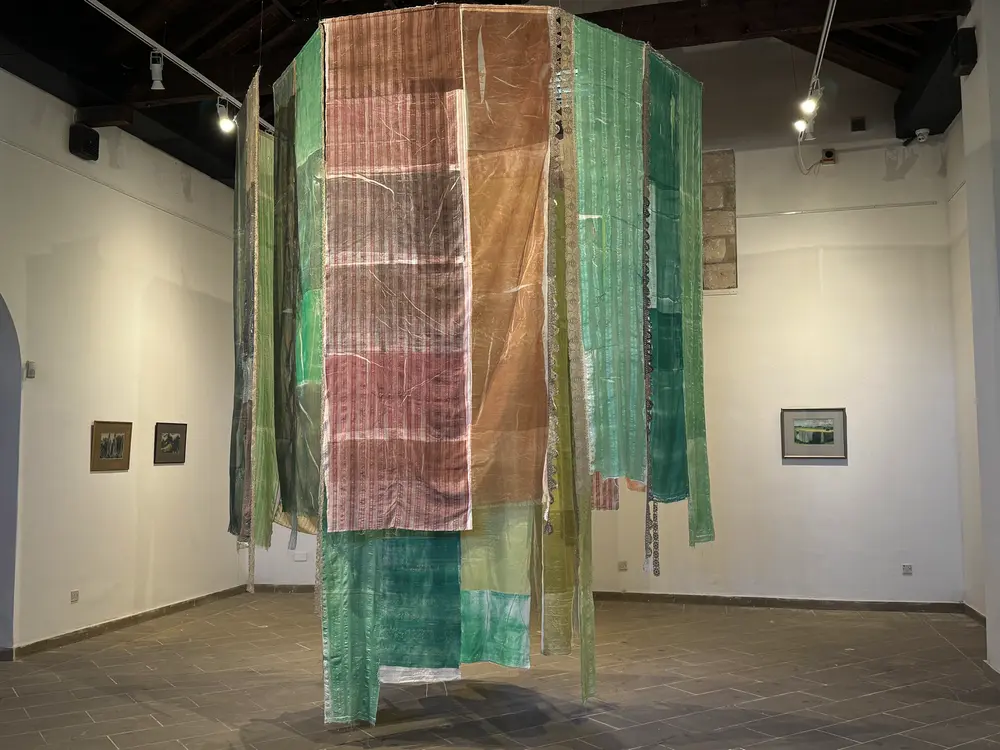
As I build surfaces with my needle and my press, I create spaces of meditation, contemplation, and reflection. I suggest this slow, mindful process as a way to heal nature and our ecosystem towards coexistence of both the human and nonhuman.
Through this manual creation using fragile materials such as paper and recycled fabrics, I try to make an abandoned legacy visible. Women’s unexpressed feelings and thoughts become a woven text. I stitch to protect vulnerable life. I stitch to create hope.
About the Artist
Evgenia Vasiloude is a visual artist and printmaker based in Nicosia, Cyprus. She holds an MA from the School of Fine Arts of Kiev and is a founding member of the "Cypriot Printmakers" association. Over the last 30 years, she has displayed works across numerous both solo and group exhibitions. She was recognised a the 9th Biennale of Cairo, where she received the Second Prize for her work titled "Hymn to Demetra" currently held in the State Collection of Contemporary Cypriot Art. More recently her works has been displayed in the U.S at the Hirshhorn Museum in Washington D.C.
Her present artistic practice combines traditional and experimental printmaking on found/old fabric, in which the manual-haptic process foregrounds the value of communality. Her works process themes of nature, environment and gender and deal with issues regarding ecology and the fragility of life. ↩︎The full text of this essay can be found at https://monoskop.org/File:Le_Guin_Ursula_K_1986_1989_The_Carrier_Bag_Theory_of_Fiction.pdf. Accessed November 2025 ↩︎